
If I had a dollar for every time someone told me they're waiting for interest rates to drop before making a move, I could probably buy another house. Okay, maybe not in Denver, although you get the point.
I get it. Truly. Nobody is excited about taking on a mortgage in the 7% range, especially when we all remember what rates looked like a few years ago. And when you throw in economic uncertainty, higher housing costs and enough conflicting real estate headlines to make your head spin, it's easy to understand why people are sitting on the sidelines.
Here's the thing, though. The market doesn't particularly care what we're waiting for.
So, What's Actually Happening in Denver?
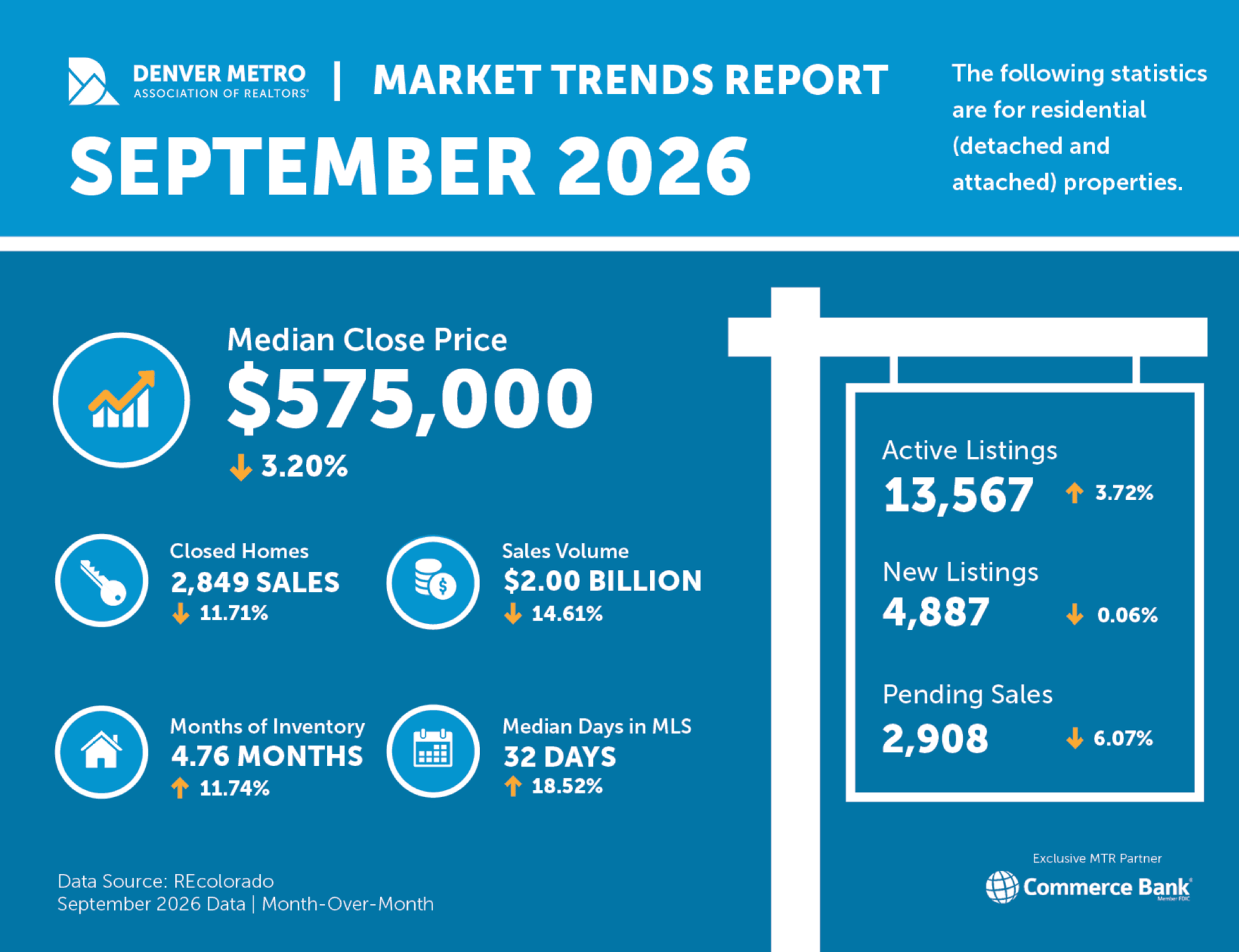
September gave us a pretty interesting combination of numbers. According to the latest Denver Metro Association of Realtors (DMAR) report, we ended the month with 13,567 active listings, up 3.72% from August and the highest September inventory we've seen since 2011. Meanwhile, closed sales dropped to 2,849, down 21.39% compared with September of last year.
The average closed sale price was $700,453, down 3.28% from August, and homes spent an average of 52 days in the MLS.
Translation? We have more homes available, fewer buyers pulling the trigger and properties generally taking longer to sell. And yet, we aren't seeing the kind of across-the-board price collapse that some of those dramatic headlines would have you believe.
In fact, when you zoom out, Denver's real estate market has been remarkably consistent over the last several years. Transaction volume has slowed, and prices have held up better than you might expect given the borrowing costs. It's a different market than 2021, and I think it's time we stop expecting it to act like 2021.
Buyers, You Might Have More Leverage Than You Think
Here's where things get interesting. Denver is sitting at 4.76 months of inventory, meaning buyers have more choices and generally more room to negotiate. And for the first time in a long time, the conversation isn't necessarily about how far over asking you need to go.
It's about how to structure a purchase that actually works for you.
Seller-paid closing costs, interest-rate buydowns, inspection negotiations and thoughtful contract terms can all become part of the conversation. Sometimes a seller credit that helps lower your monthly payment is worth more to your financial situation than simply getting a slightly lower purchase price.
Of course, this doesn't mean every seller is ready to hand over the keys and throw in a new roof for fun. Beautifully presented, well-priced homes in desirable locations can still attract serious attention. And that is why having a strategy is more important than ever.
If you're waiting for interest rates to hit some magical number before you even begin exploring your options, you could be overlooking opportunities that exist right now. That doesn't mean you should buy before you're financially ready. It means you should understand your options before deciding to sit out.
Sellers, We're Not in the "Let's Just See What Happens" Era
On the flip side, sellers need to understand that buyers are doing their homework. They're comparing homes, looking at condition, researching renovation costs and thinking about the long-term expense of ownership.
And they're not particularly interested in paying yesterday's prices for tomorrow's projects.
This is where I get a little passionate about pricing and preparation. You can't control interest rates or how many other homes are listed in your neighborhood. You can control how your home shows, how it's positioned against the competition and whether the price makes sense to today's buyer.
And here's something interesting: the September market's close-price-to-list-price ratio was 98.45%. That tells us homes are generally closing below their final list price. What that number doesn't show is the money changing hands through seller concessions, closing-cost credits and rate buydowns.
Which means the final sales price is only part of the story.
The best outcomes right now are coming from sellers who understand the competition, prepare their homes thoughtfully and make strategic decisions early rather than chasing the market with price reductions months later.
The Luxury Market Didn't Get the Memo
Now for one of my favorite little plot twists in this month's data.
While overall year-to-date Denver metro sales were down 4.96%, sales above $1 million were actually up 1.99%. That's 4,449 luxury transactions so far this year, representing approximately $7.3 billion in sales volume.
And those homes are moving! In September, properties priced at $1 million and above spent an average of 44 days in the MLS, compared with 52 days for the overall market.
So while much of the market is moving more cautiously, the higher end is still finding ways to transact. It's a great reminder that the Denver market isn't one giant group of buyers and sellers all behaving the same way.
Price point matters. Location matters. Condition matters. And what someone is trying to accomplish matters.
The Part I Really Want People to Understand
Here's my biggest takeaway from September's report: we may be in this type of market for a while.
I know. Not exactly the dramatic prediction everyone was hoping for.
And I think that's important because waiting for everything to look like it did a few years ago isn't much of a plan. Real estate decisions should start with your life, your finances and your goals, not a headline predicting what the Fed might do next.
Maybe that means moving closer to work. Maybe it means finding a home with room for a growing family, downsizing into something easier to maintain or simply staying put because your current setup still makes the most sense.
All of those can be smart decisions